A Dress that Started as Packaging
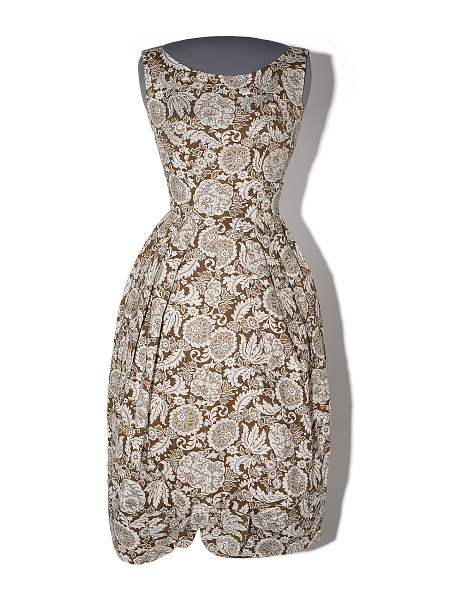
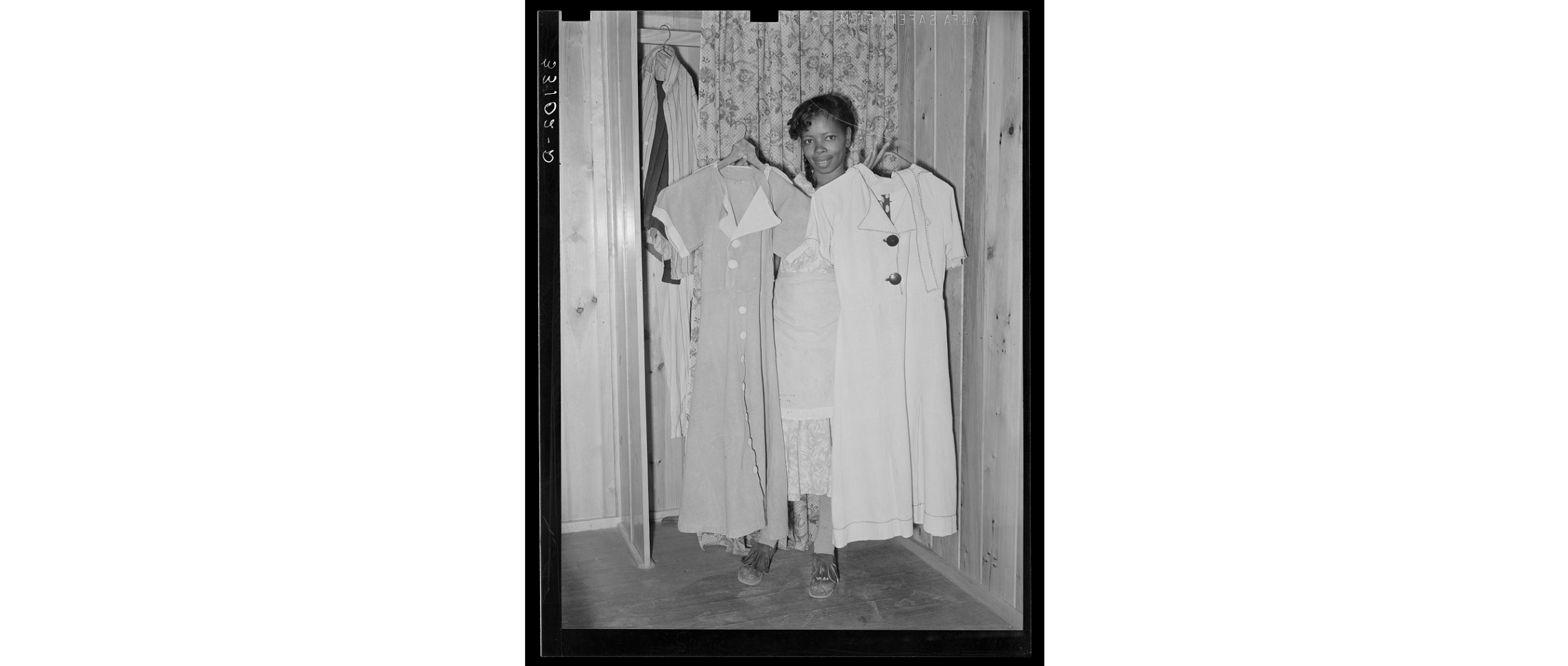
During the Great Depression, families had an acute lack of money. This meant that already poor families had even less than they had prior to the depression. It also meant that these families were not able to afford expensive fabrics or other clothing. What started with women taking various cotton sacks and bags to make clothing turned into a country wide phenomenon. The companies producing goods latched on to this idea and began printing feed bags with printed patterns.
During the Great Depression, printed flour sack textiles became both a symbol of economic necessity and a tool of consumer marketing, as flour companies used decorative packaging to drive sales while families repurposed the fabric into children’s clothing in order to preserve thrift, dignity, and social identity.
My project aims to recreate a feed sack dress that would have been common to find in the 1930’s. I wanted to stay as accurate to the time period as possible and wished to employ 1930’s sewing techniques, as well as authentic fabric.
Silhouettes in Children’s Clothing
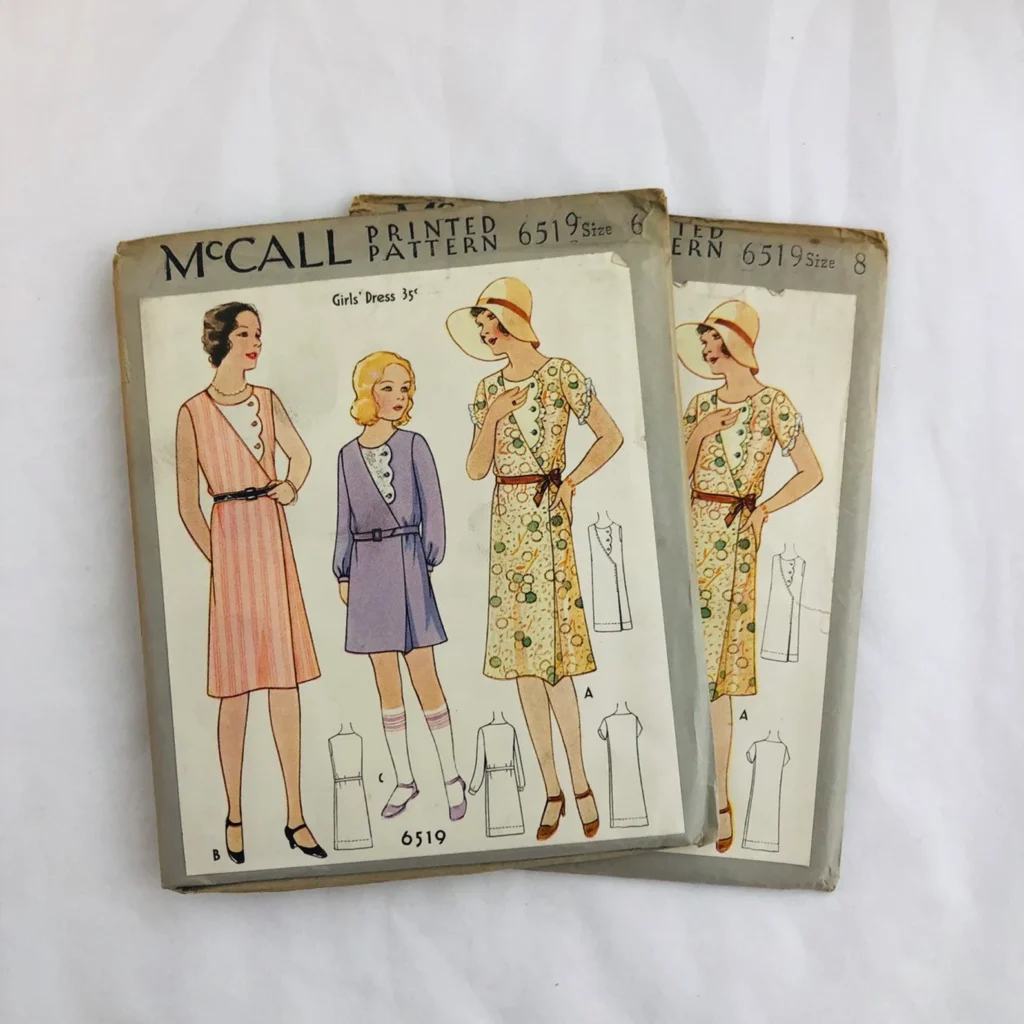
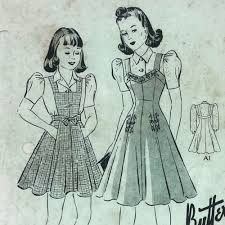
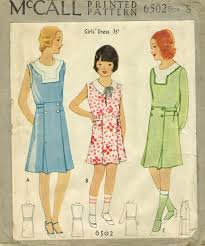
I went searching for actual patterns from the 1930’s. One of the concerns I had was that my research showed that most feedsacks were about one yard of fabric. Almost all the patterns found would take at least two to three yards. I knew that finding two or three of the same feedsacks would be difficult but I was determined to find matching ones for whichever pattern I chose.
Fabric Choice
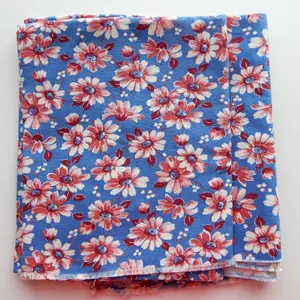
I was so lucky to find this listing on Etsy for Two (2) Vintage 1930s Blue, Pink, Red & White Floral Feedsacks – Authentic Depression Era Flour or Feed Sacks – Good Clean Condition . It cost a lot (for me) at $23.00 per sack, but I decided to risk it and purchased them. They were a bit musty on arrival, so both sacks got several nice soaks in the sink! I will spare you the pictures of the aftermath, but let’s say the water was extremely…murky.
I also wanted to authenticate the fabric. Mary Kerr, an American Quilter’s Society certified appraiser, was kind enough to give my fabric a look and she confirmed that it appeared as genuine feedsack fabric from the 1930’s.
Pattern Selection
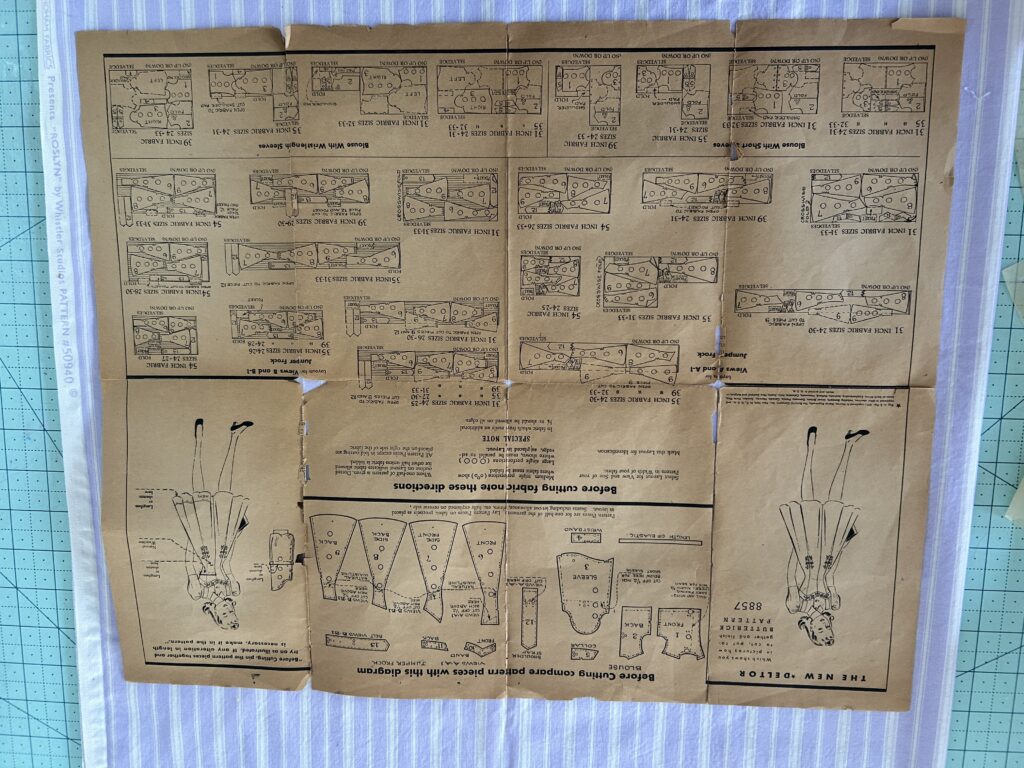
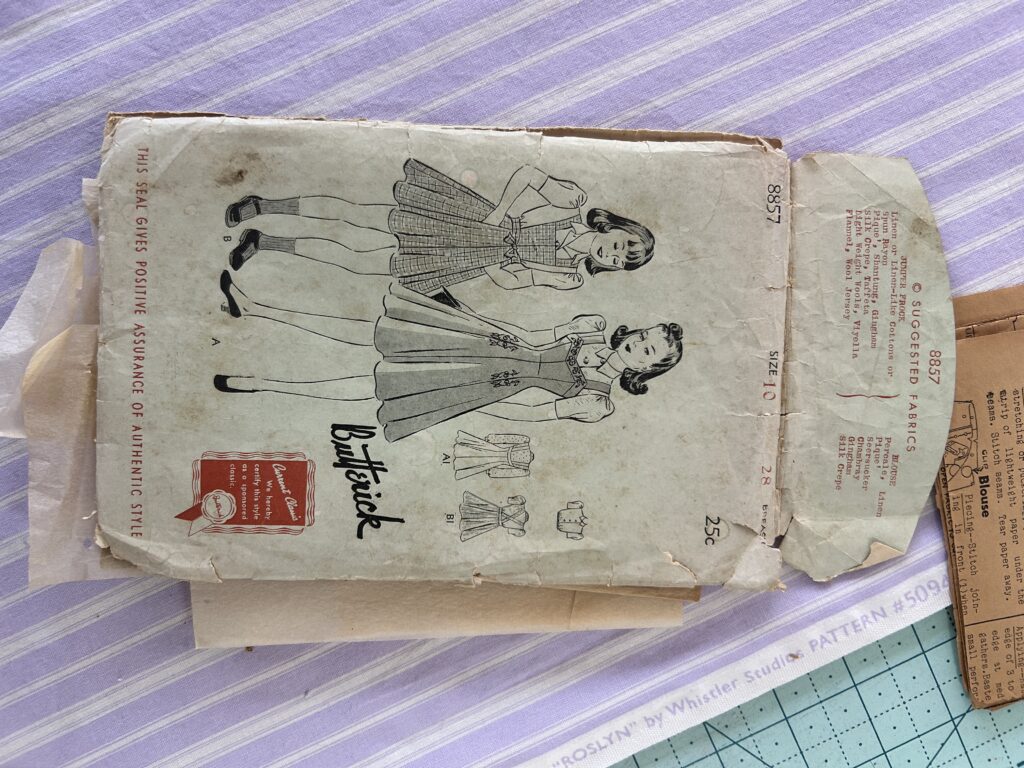
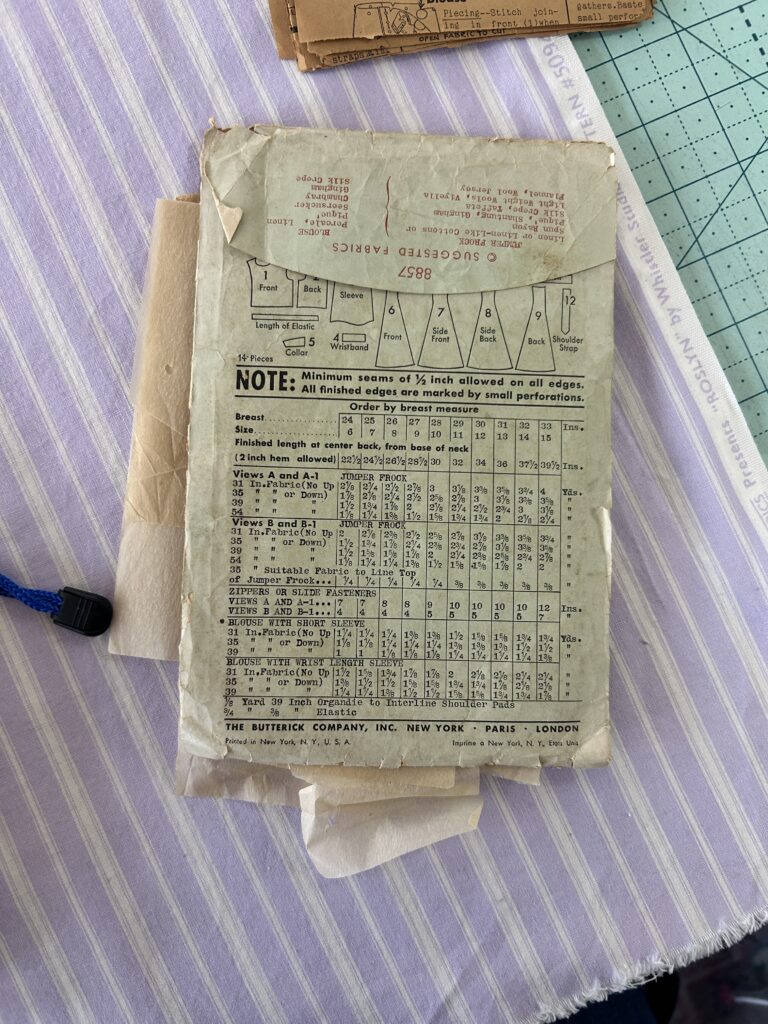
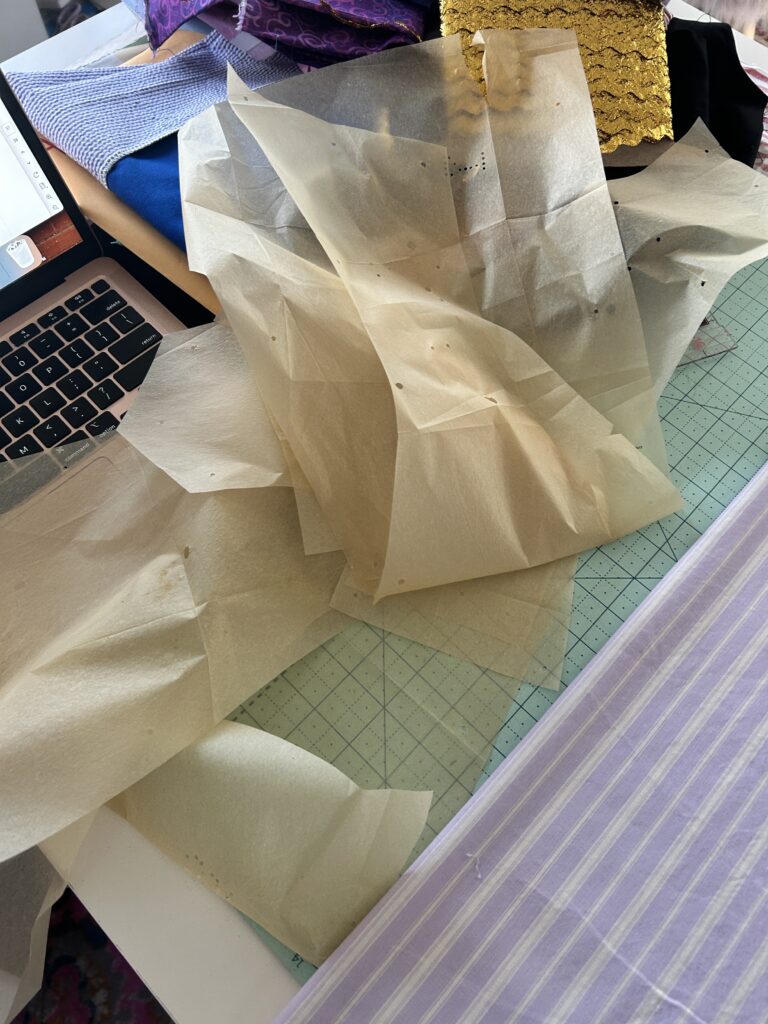
I decided to use the Butterick 8857 – 1930s Youth Embroidered Sweetheart Jumper and Blouse Pattern – Size 10 (28″) – Complete with Transfer simply because it would give me a chance to add some hand embroidery, as well as fitting with the two yards of fabric I had.
Mockup
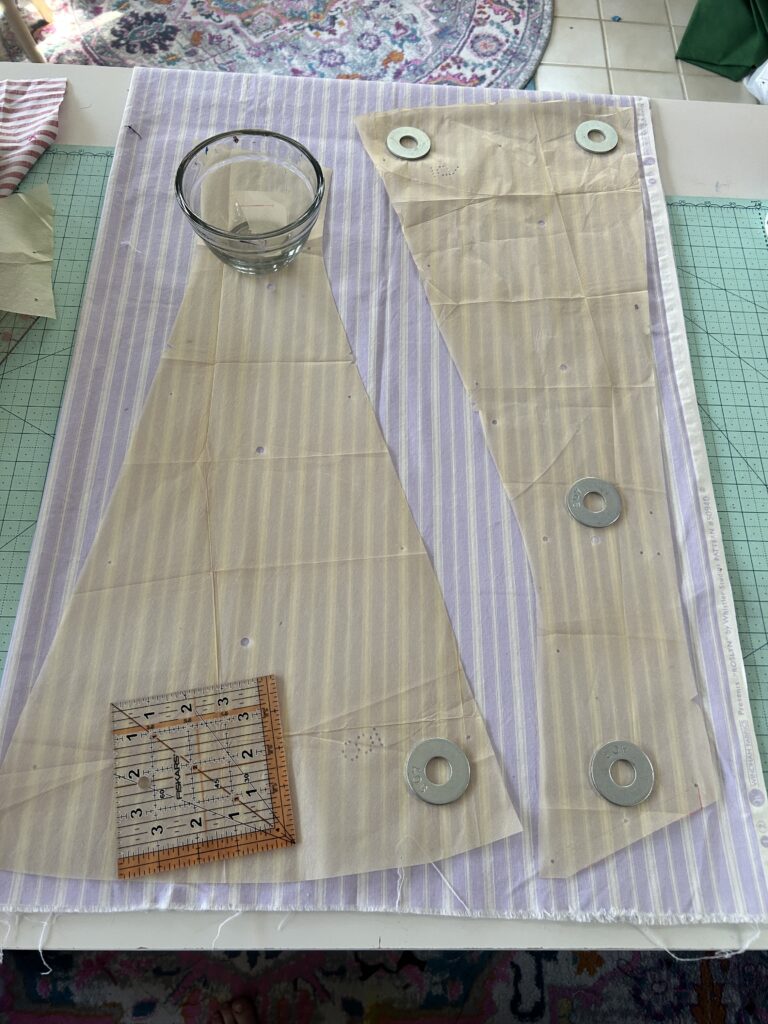
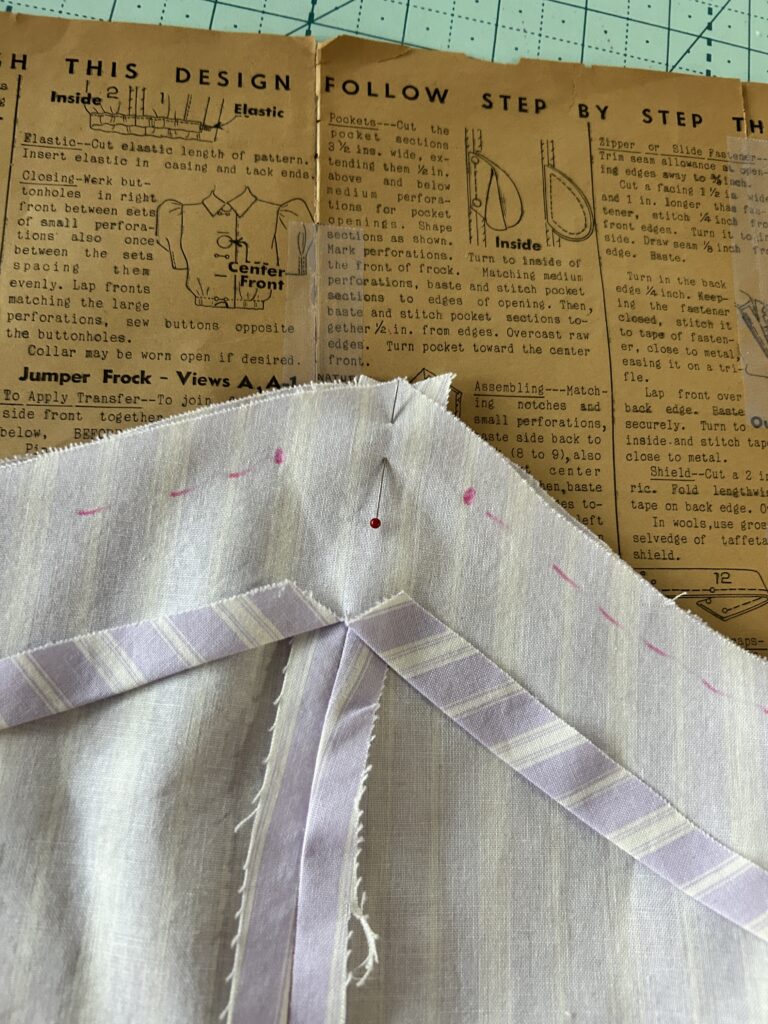
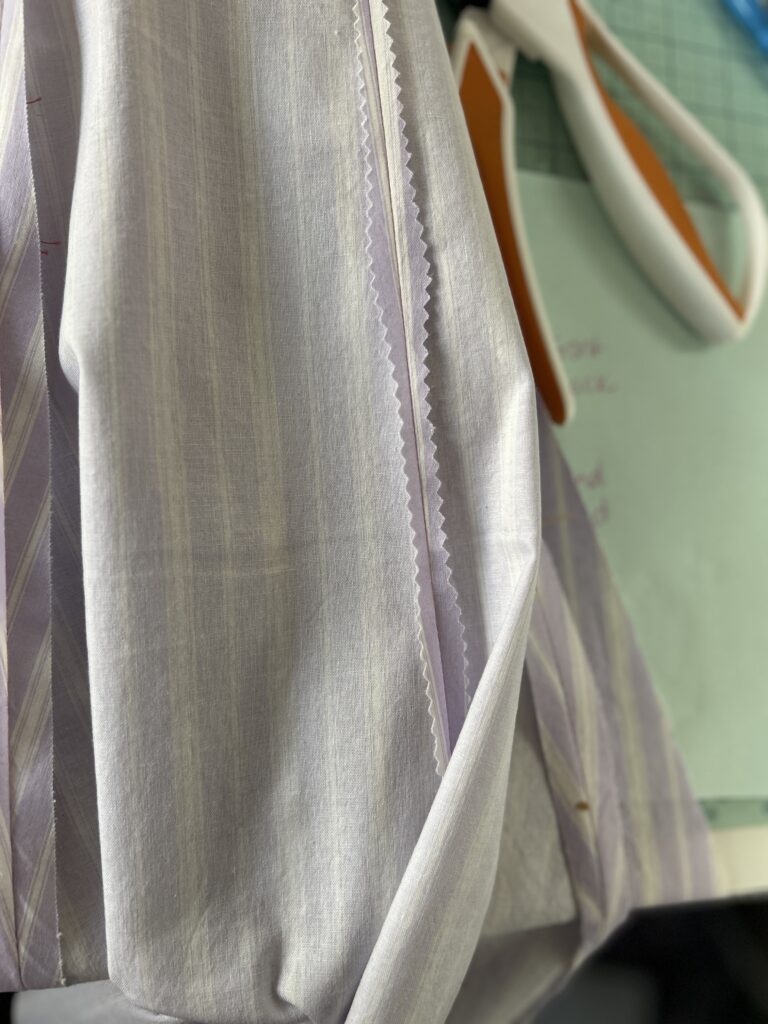
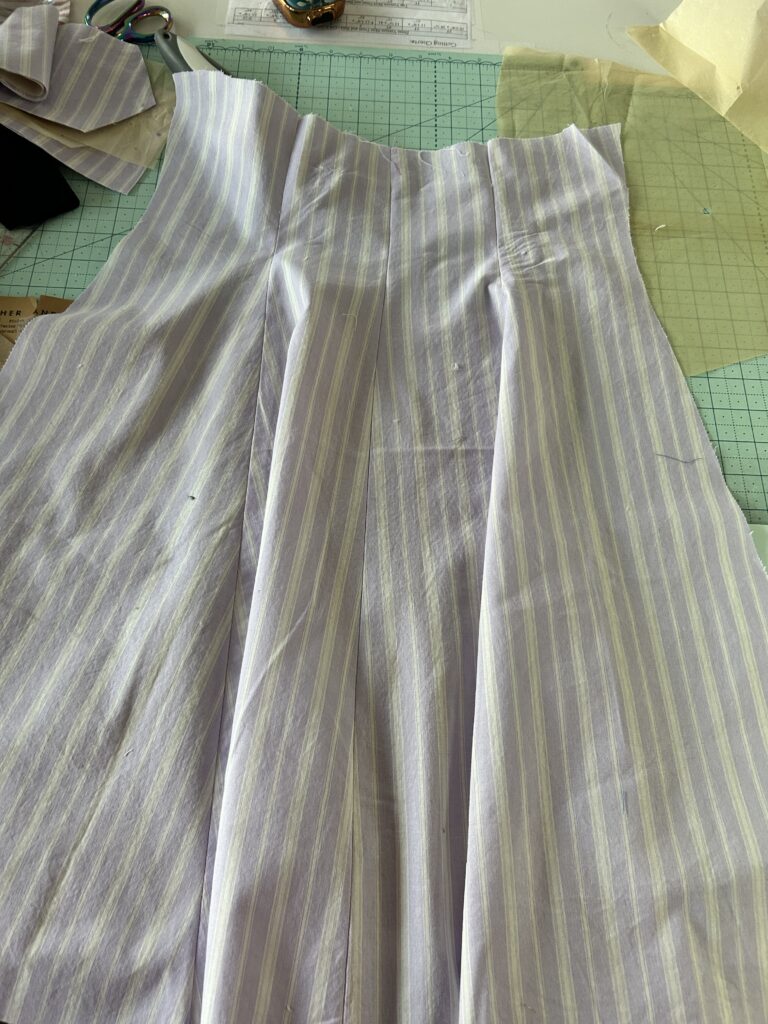
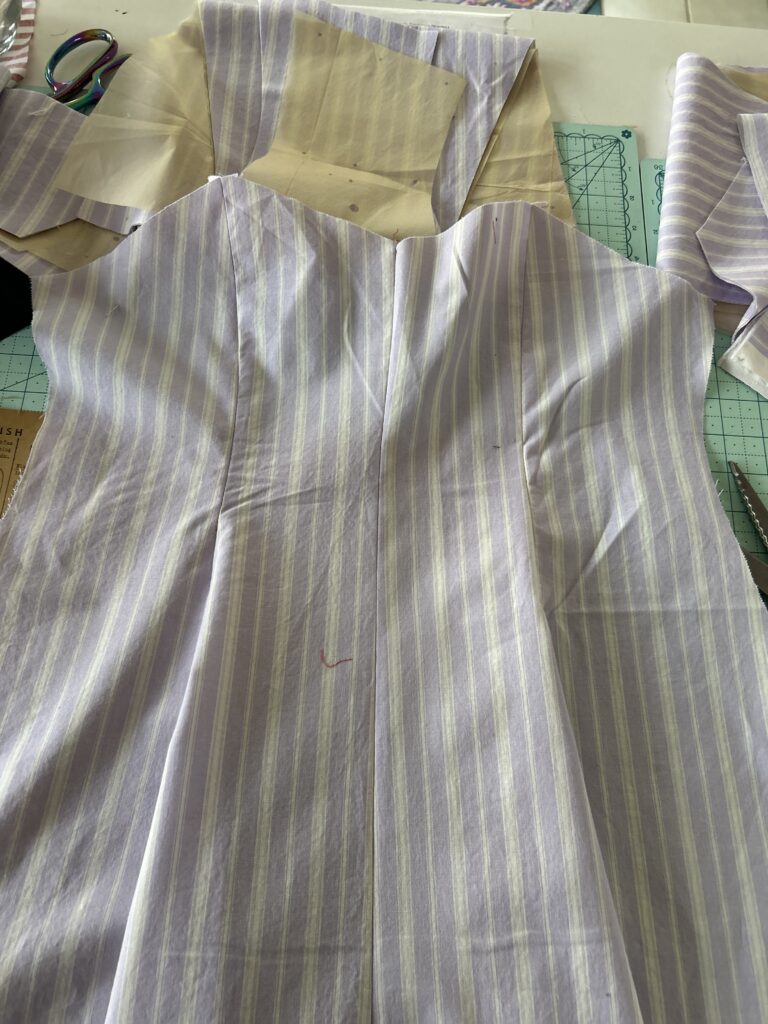
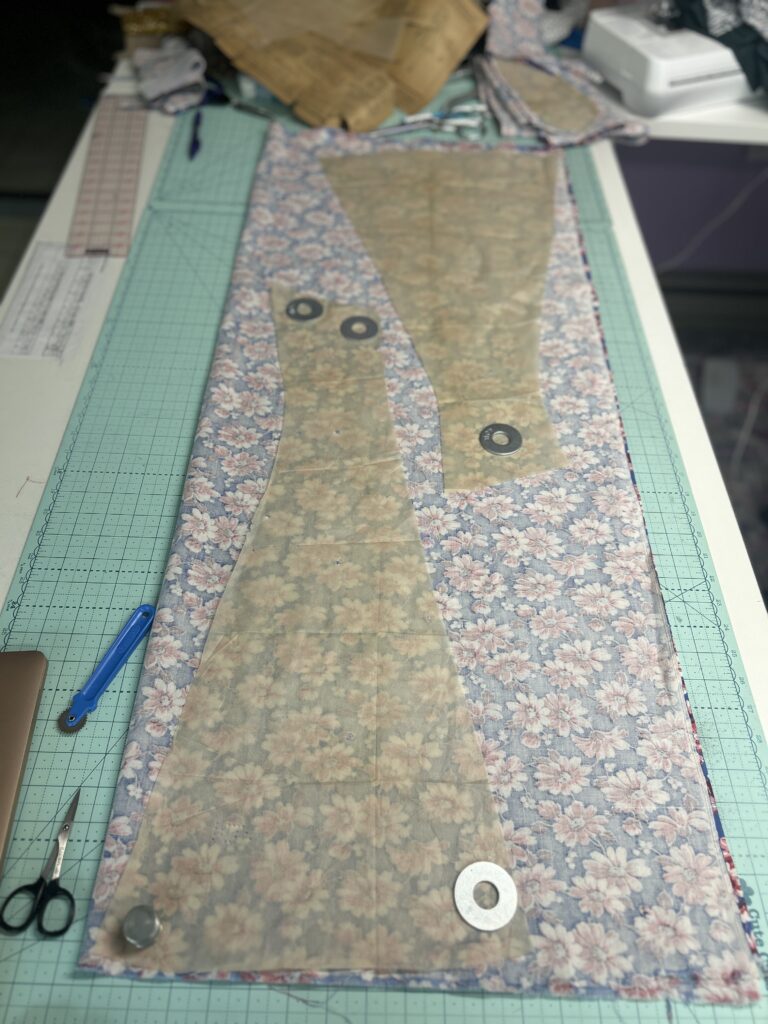
I choose a spare woven fabric I had and took measurements from my model. She fit right into the sizing for the size 10 that came with the pattern. The first step was to iron out the pattern pieces since they were stuck in an envelope for 90 years. The worse part of the pattern was instruction page. It was very brittle and ripped every time I handled it. But I wanted to ensure I used all of the instructions from the pattern and not the way I would sew today. While this meant I could use a sewing machine, I was unable to serge my seams. The instructions called for pinking them so I followed that instruction.
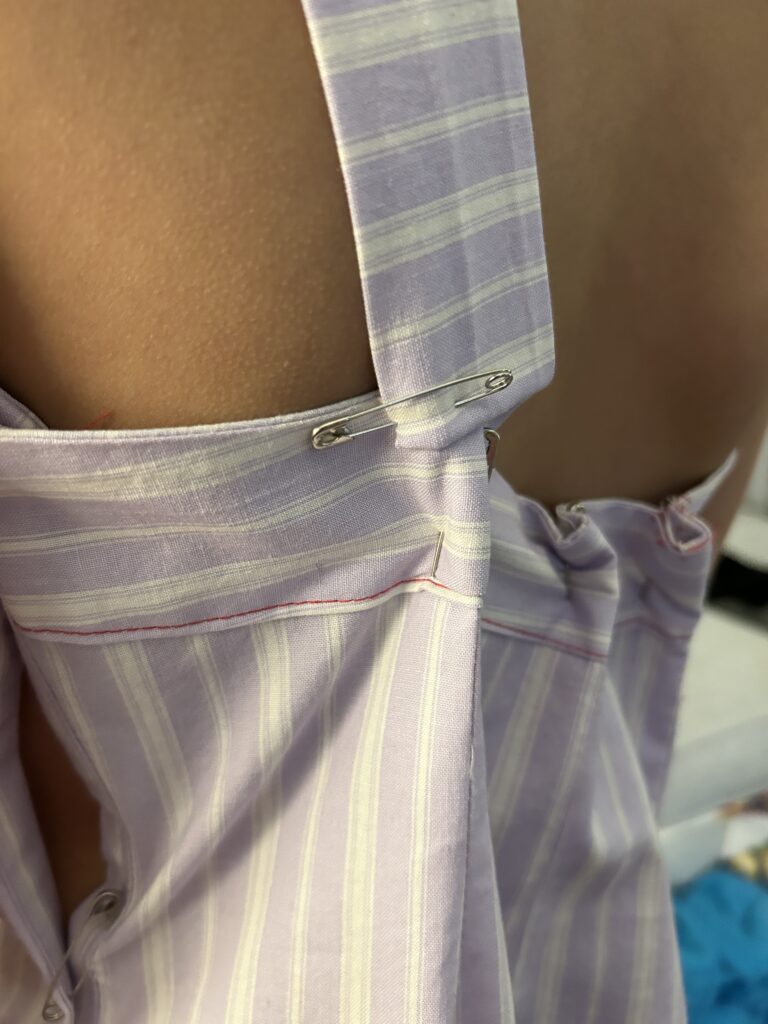
I was astonished to find that the dress fit way bigger than intended. The pattern called for 1/2″ seam allowances and even with following that allowance, the dress ended up needing about 3/4″ taken off each seam.
Main Fabric and Embroidered Collar
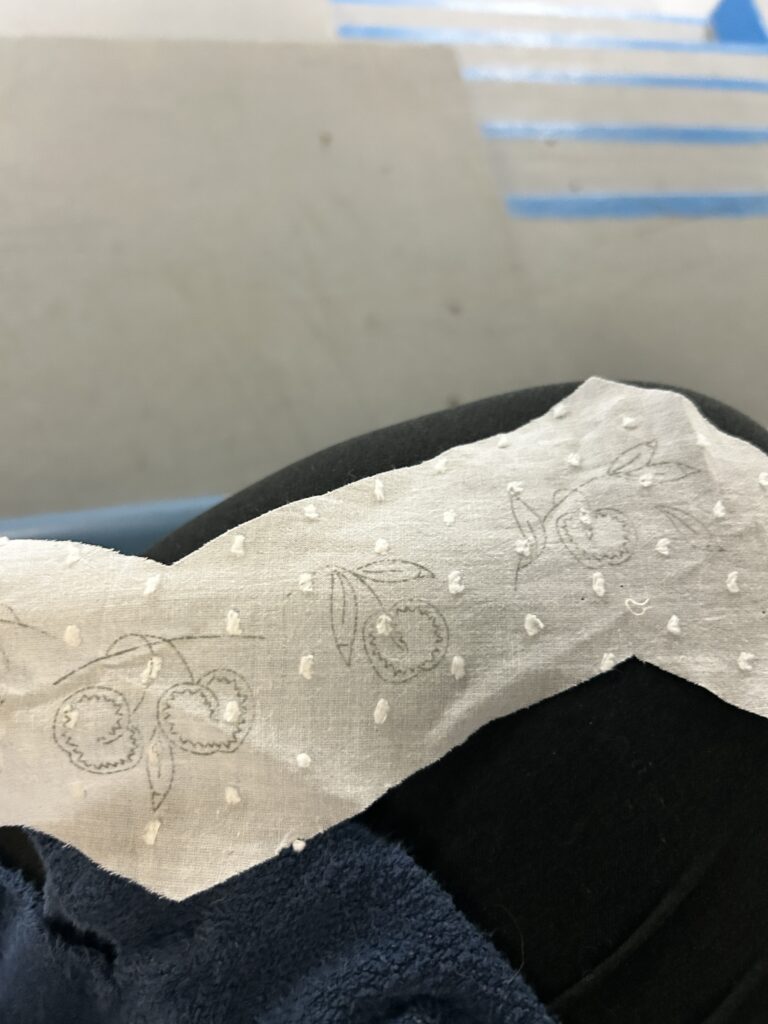
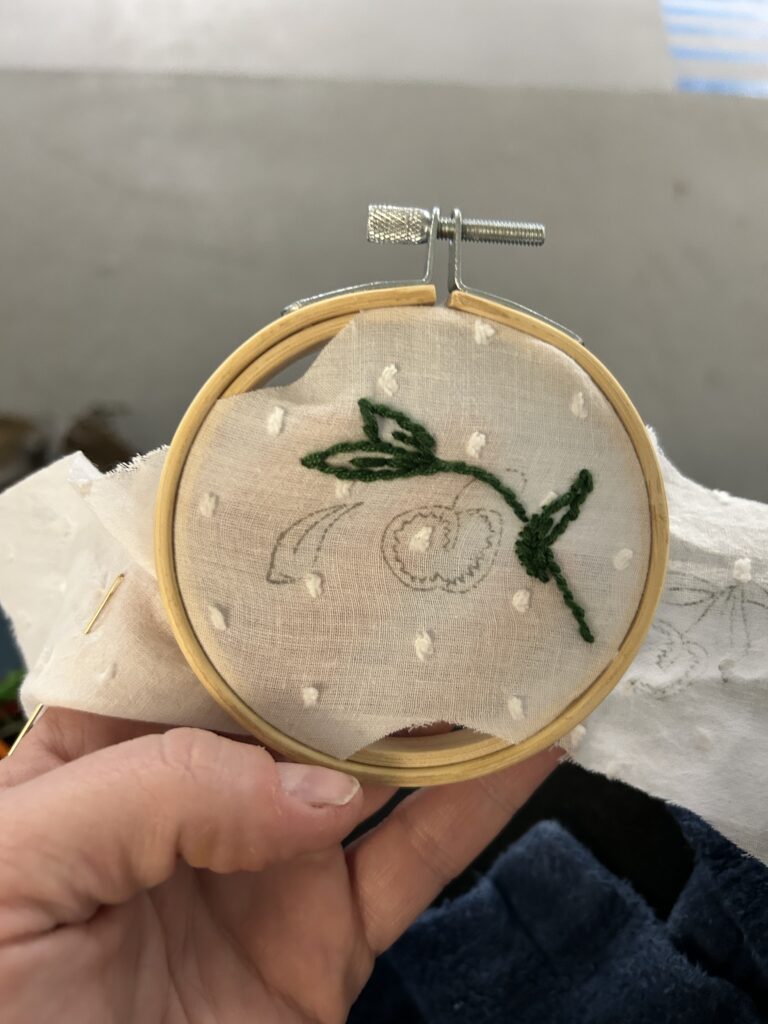
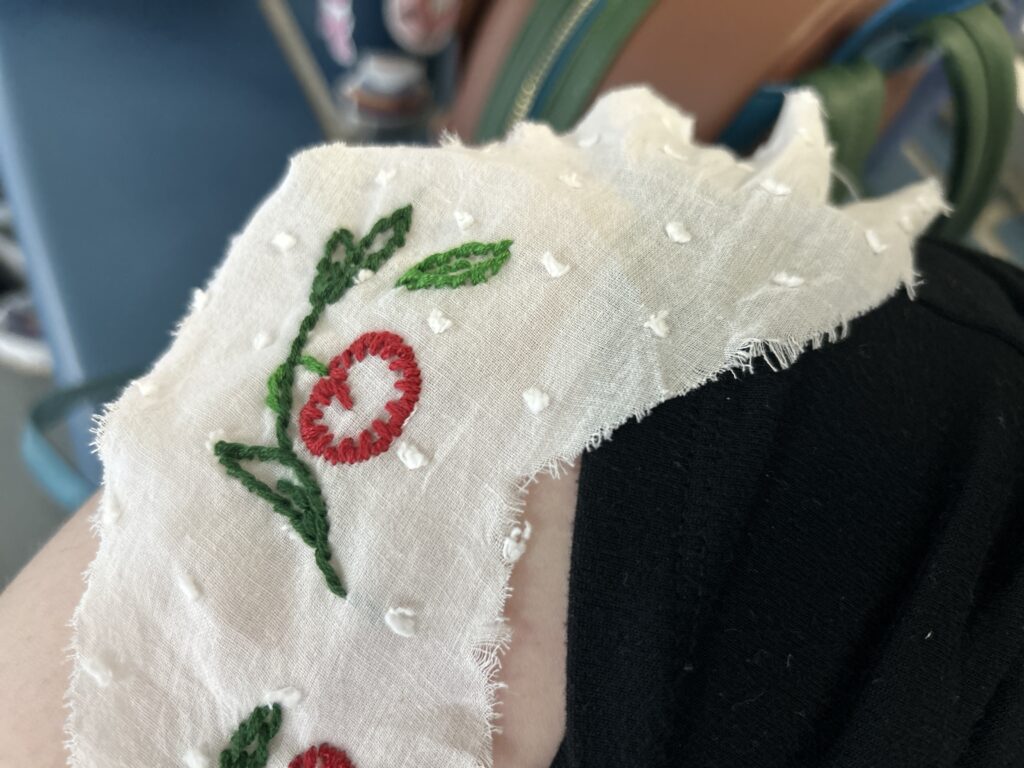
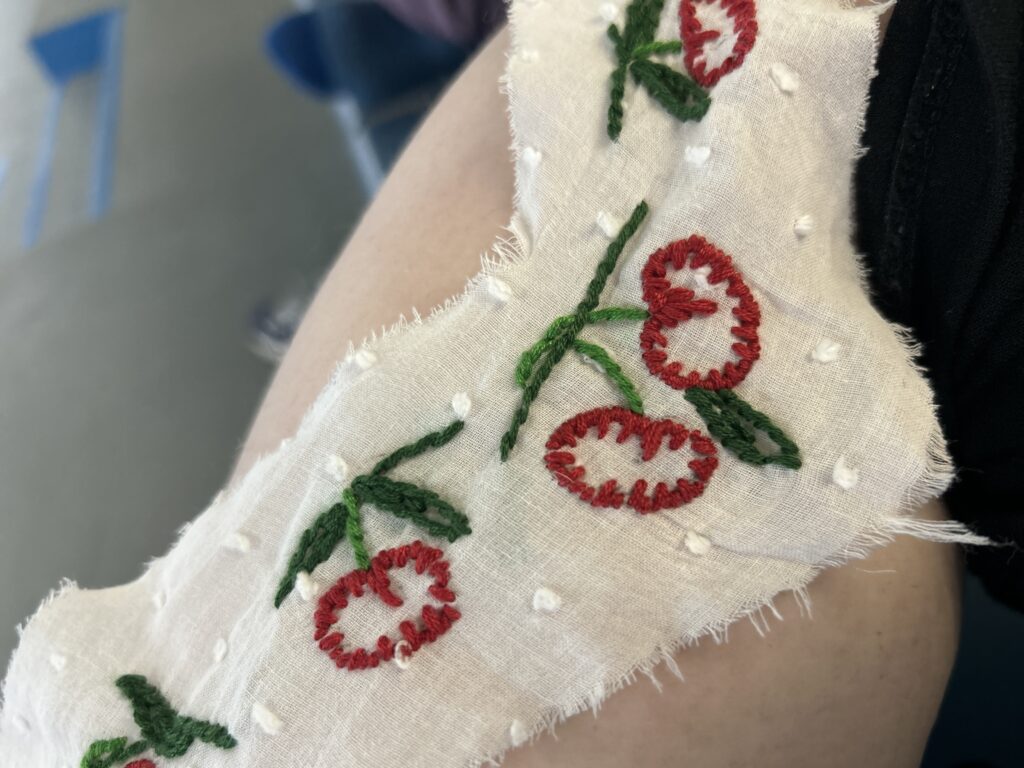
I was so excited to see that the embroidery transfer from the original pattern still worked. The instructions called for 6 strands of floss, as well as using uneven satin stitches and a stem stitch for the leaves and stems of the cherries.
Completed Feed Sack Dress
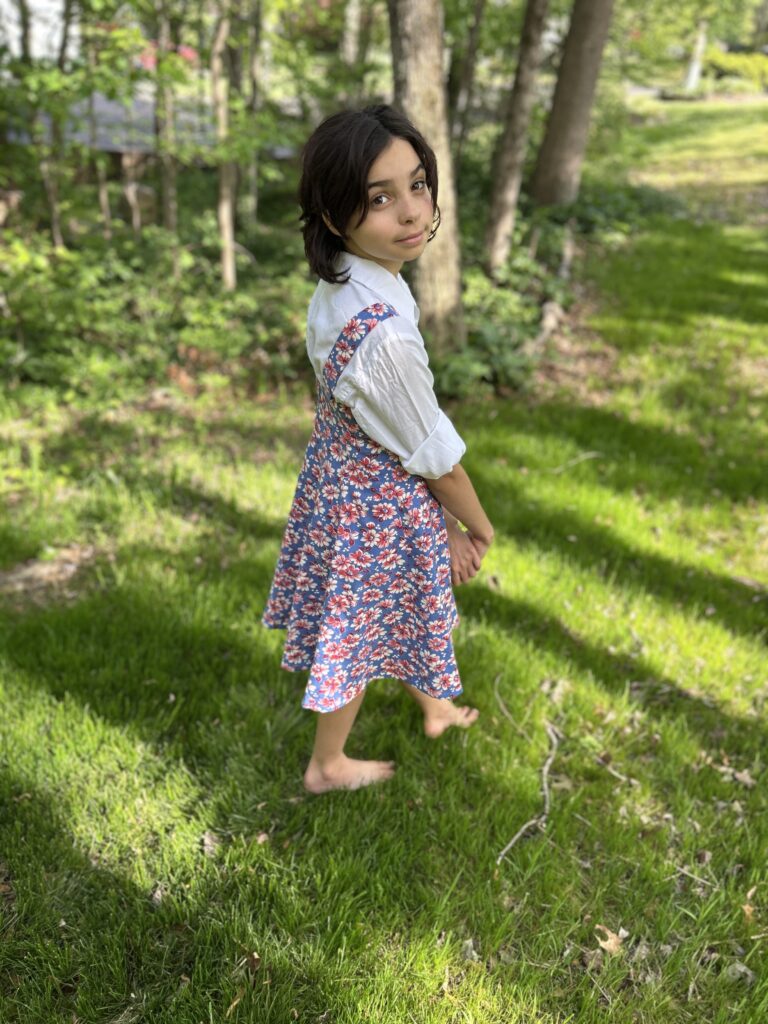
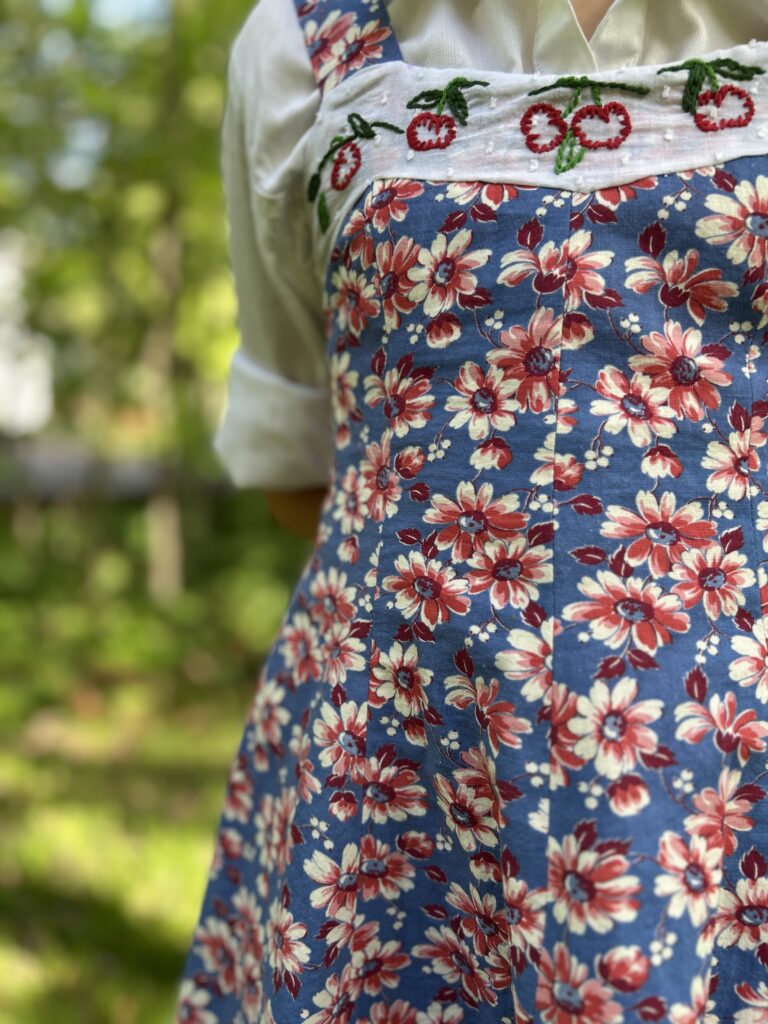
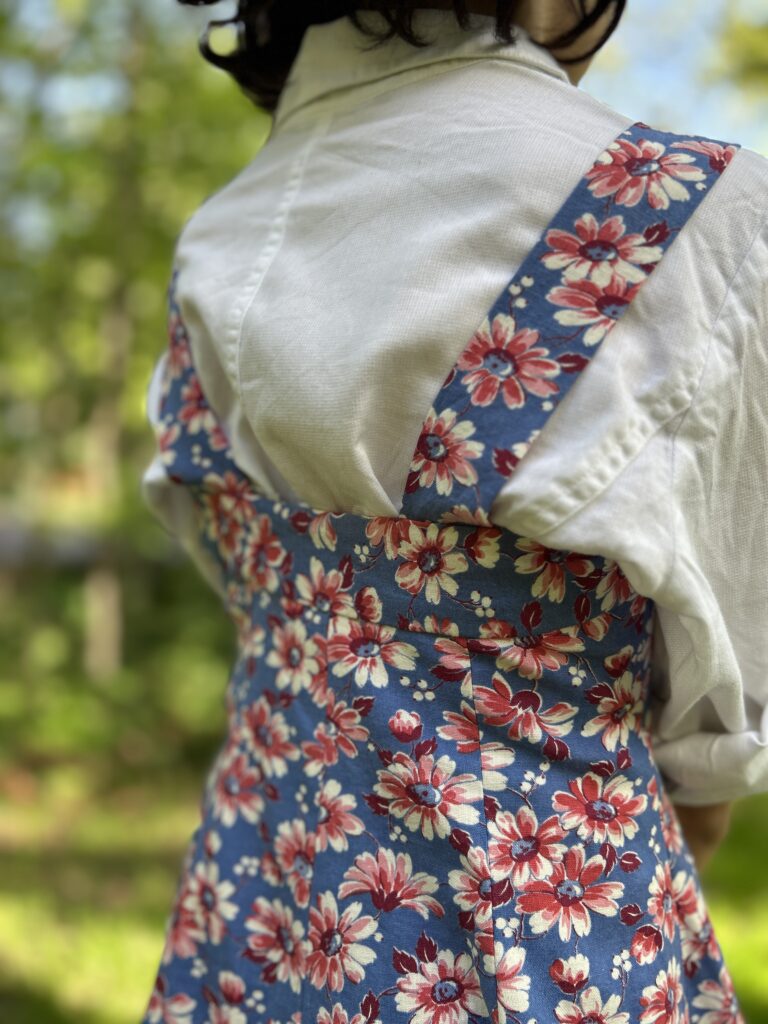
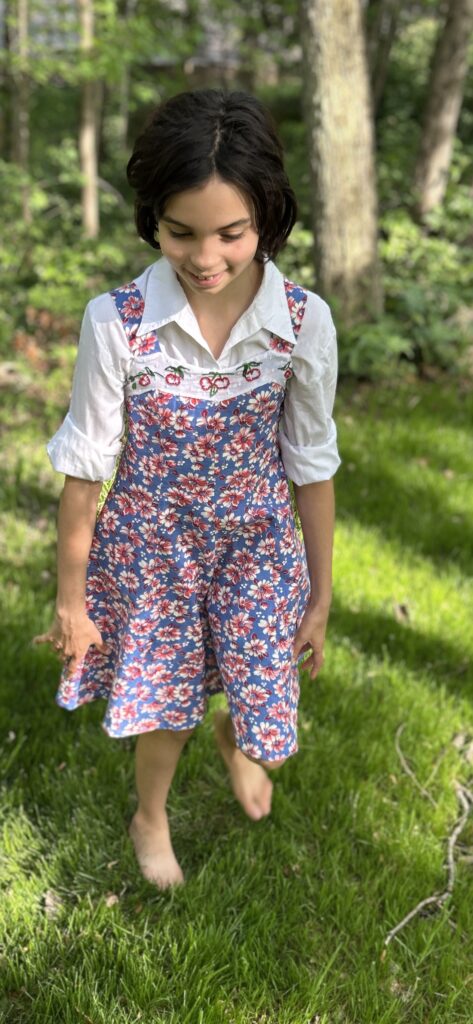
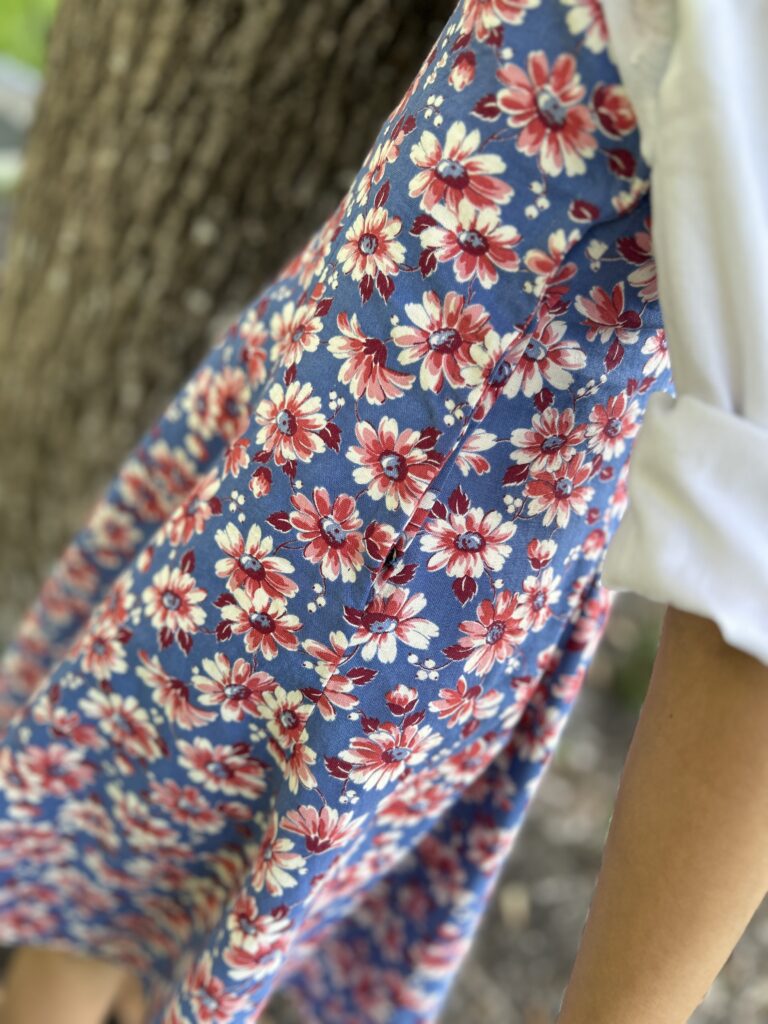
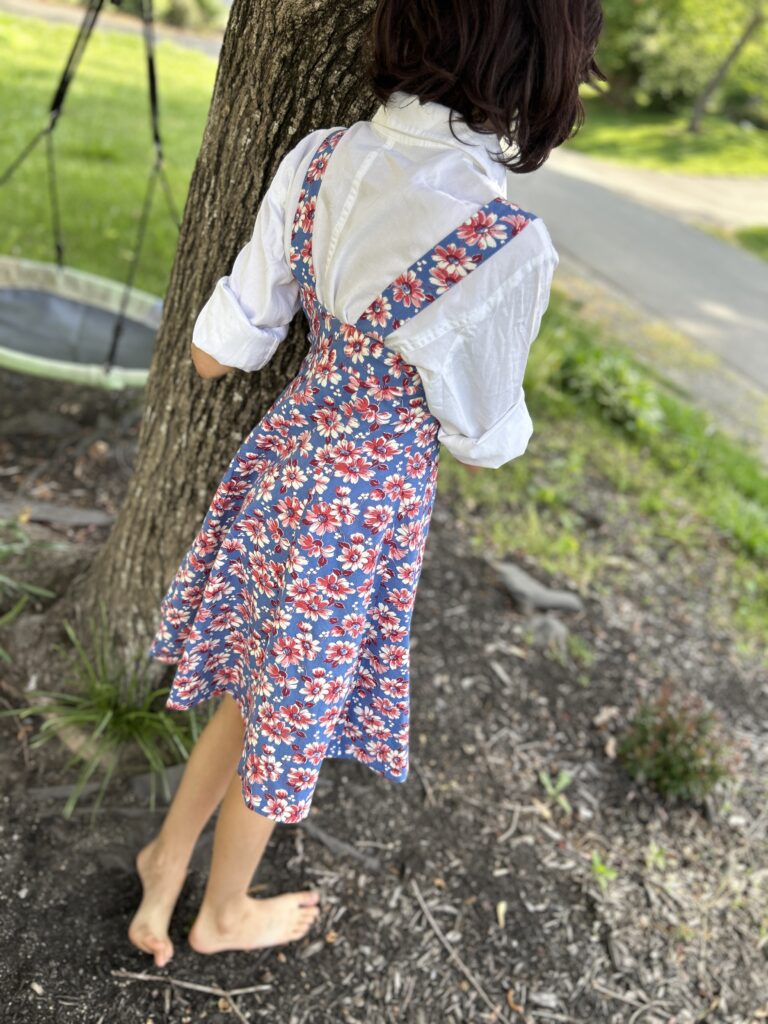
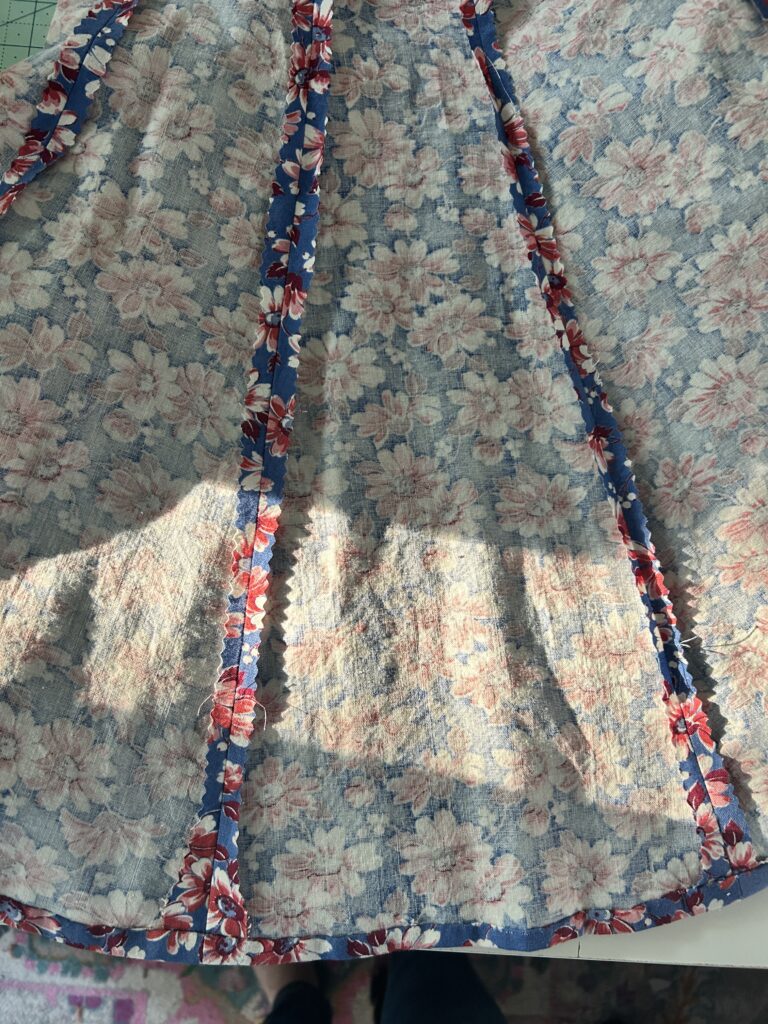
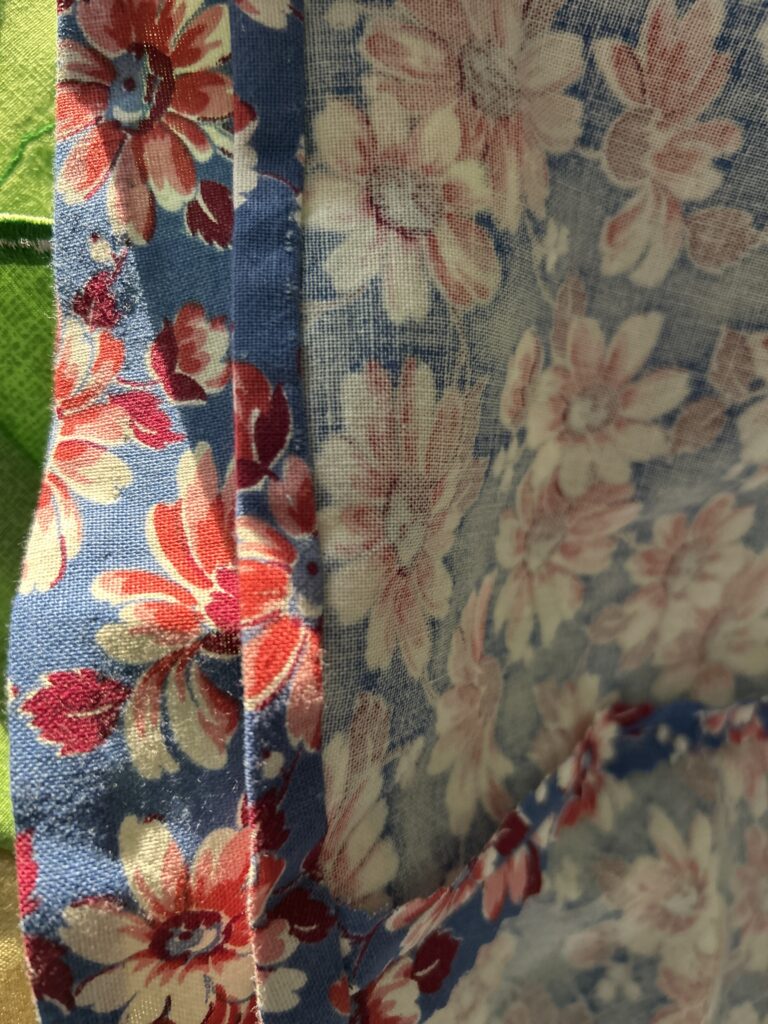
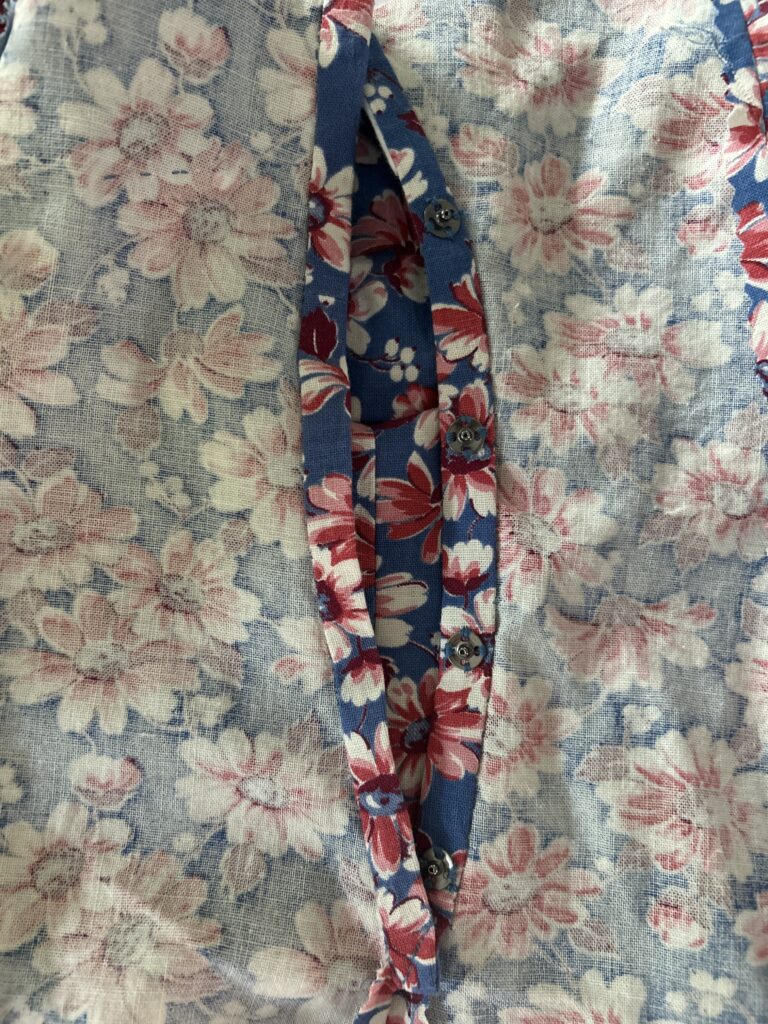
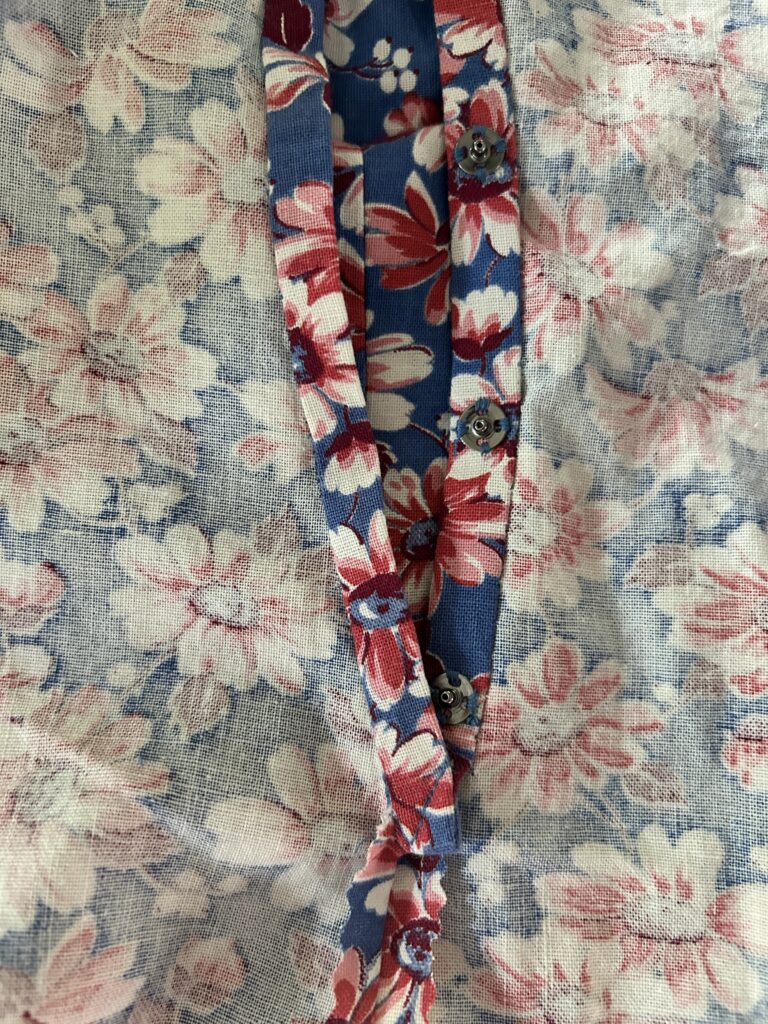
After reducing the pattern at each seam 1/2″, I was able to cut out the pattern out of both feedsacks. I am really happy that when I did the mock up I cut the fabric into the exact dimensions of the sacks in order to get the layout of the pattern correct on the fabric. I chose to do a continuous lap and snaps as the closure. The instructions did say a zipper was possible, but I wanted to do a more common closure at the time. I also chose to utilize a blind hem handsewn on the hem of the skirt, as well as a prick stitch on one side of the continuous lap.
Conclusion
Even within the constraints of the Great Depression, families could exercise choice in how they clothed their families. By selecting flour brands with desirable prints, they participated in a form of consumer decision-making. This surge in the market not only made companies change the way they packaged their goods, but that identity and taste remained important, even in difficult circumstances.
The addition of the embroidery indicates that there were other ways to embellish pieces of clothing to make them appear significantly higher in quality.
My feed sack dress reflects all of these dynamics. It is both a practical item of clothing and a nod to the marketing by dry goods companies of the 1930’s. These dresses were shaped by economic conditions, marketing strategies, and social expectations, much like fashion still is today.
References:
Powell, Margaret M. “From Feed Sack to Clothes Rack: The Use of Commodity Textile Bags in American Clothing.” In Textile Society of America Symposium Proceedings, 2012.
Smithsonian National Museum of American History. “Feedsack Dress.” Accessed April 1, 2026. .
Library of Congress. “Farm Security Administration/Office of War Information Black-and-White Negatives.” Accessed March 29, 2026. https://www.loc.gov/collections/fsa-owi-black-and-white-negatives/.
Wills, Donna, Mary Hufford, and John Flynn. Making Dresses from Feed Sacks. 1992. Audio. https://www.loc.gov/item/cmns001597/.
Textile Research Centre Leiden. “Feedsacks and the Great Depression.” Accessed April 1, 2026. .